

Parallel imports: a practical supply solution
In international trade, the official supply route does not always provide the most effective solution.
Manufacturers often appoint importers or distributors to represent their products in specific markets. In principle, this should create local access, stock availability, customer support, and market development.
In reality, the market does not always receive that level of service.
Pricing may become uncompetitive. Stock may become inconsistent. Customer support may weaken. In some cases, the appointed importer simply does not develop the market actively enough.
When this happens, parallel imports and alternative supply routes can offer a practical commercial solution.
What are parallel imports?
A parallel import usually involves a genuine product bought in one market and supplied into another market outside the usual authorised distribution structure. In the UK, parallel trade is closely connected to the rules on exhaustion of intellectual property rights.
Some people also call this a grey import. However, the important point is product authenticity. The product must be genuine, correctly sourced, and properly documented.
A professional parallel import structure does not rely on counterfeit goods, poor paperwork, or uncontrolled trading. Instead, it depends on genuine products, transparent sourcing, correct import documentation, and full attention to compliance in the destination market.
Why importers consider alternative supply routes
For importers, parallel imports can create access to products that may otherwise be unavailable, overpriced, or poorly supported.
A structured alternative supply route can help improve:
- Product availability
- Stock continuity
- Commercial margins
- Customer responsiveness
- Access to genuine products
- Speed of supply
This can be especially valuable when market demand exists, but the official route is not delivering the level of service or pricing that customers need.
Why suppliers should also pay attention
Parallel imports are not only relevant to importers. They can also reveal important information for manufacturers and suppliers.
If an appointed importer is not developing a market properly, alternative supply channels may show that demand exists. They may also highlight that a product could perform better with stronger representation, better stock management, or more competitive pricing.
In this sense, parallel imports can act as a signal. The market may want the product, but the existing route may not serve that market well enough.
Compliance and control are essential
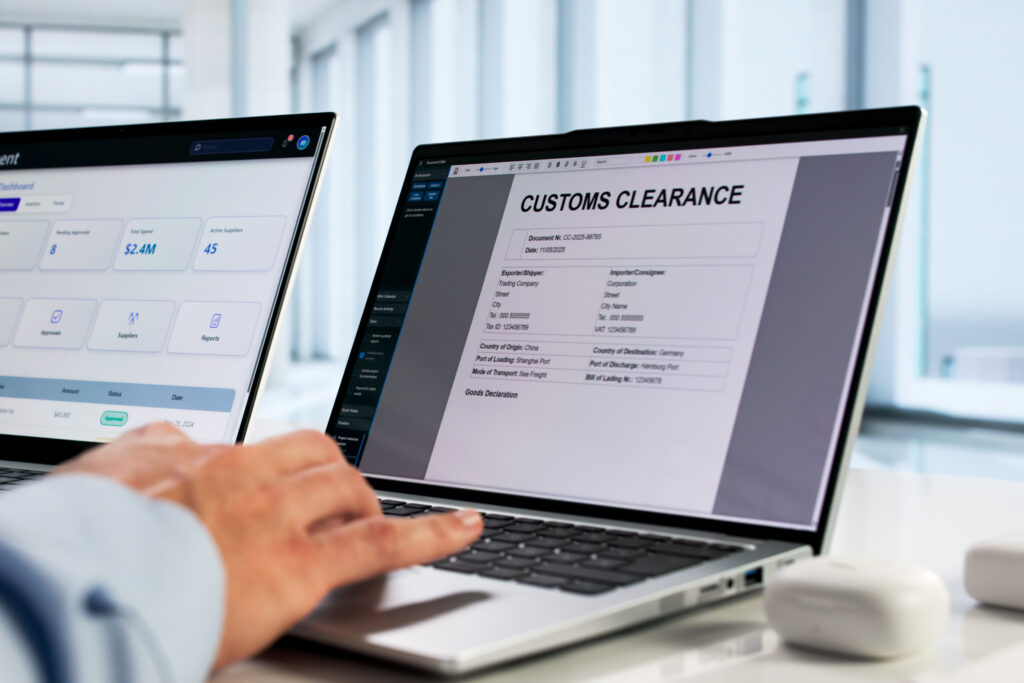
Companies must handle alternative supply routes carefully.
Before goods move, the parties involved need to understand product authenticity, customs documentation, duties, VAT, conformity requirements, warranty expectations, packaging, labelling, after-sales responsibilities, and intellectual property rights around parallel trade.
This is where experience matters.
A poorly managed parallel import can create risk. A well-managed one can solve a real supply problem.
At Novex, we work with this type of structure across various product categories. Through our European companies, including our Italian operation, we can purchase from established European supply markets and sell internationally, while managing the commercial, logistical, and documentation process through our structured Supply Focused Methodology. This approach supports companies that need a more structured sourcing solution, particularly when the existing route does not provide the stock, pricing, or responsiveness the market needs.
When parallel imports make sense
Parallel imports are not the right solution for every product or every market.
However, when the official supply route is not performing, they can provide a controlled and commercially sensible alternative.
For importers, they can open access to genuine products on better terms.
For suppliers, they can reveal opportunities in markets where existing representation is not delivering.
Customers can also benefit through better availability, better pricing, and a more responsive supply chain.
A structured approach to international sourcing
At Novex, we help businesses turn fragmented sourcing into a structured commercial advantage.
We assess when an alternative supply route makes sense, structure the process correctly, and manage it with the necessary commercial and compliance controls.
The key issue is not simply whether a product can be sourced differently.
What matters most is whether the market is being properly served.
For more thinking on changing global sourcing strategy, read our article on global sourcing in flux.
Need a better route to market or a more reliable supply channel?
Novex helps importers, suppliers, and manufacturers assess alternative supply routes, manage international sourcing, and build controlled, compliant supply structures. Contact us to discuss your product category and market requirements.