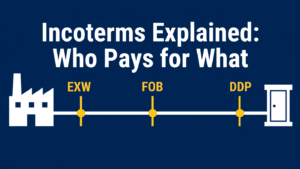
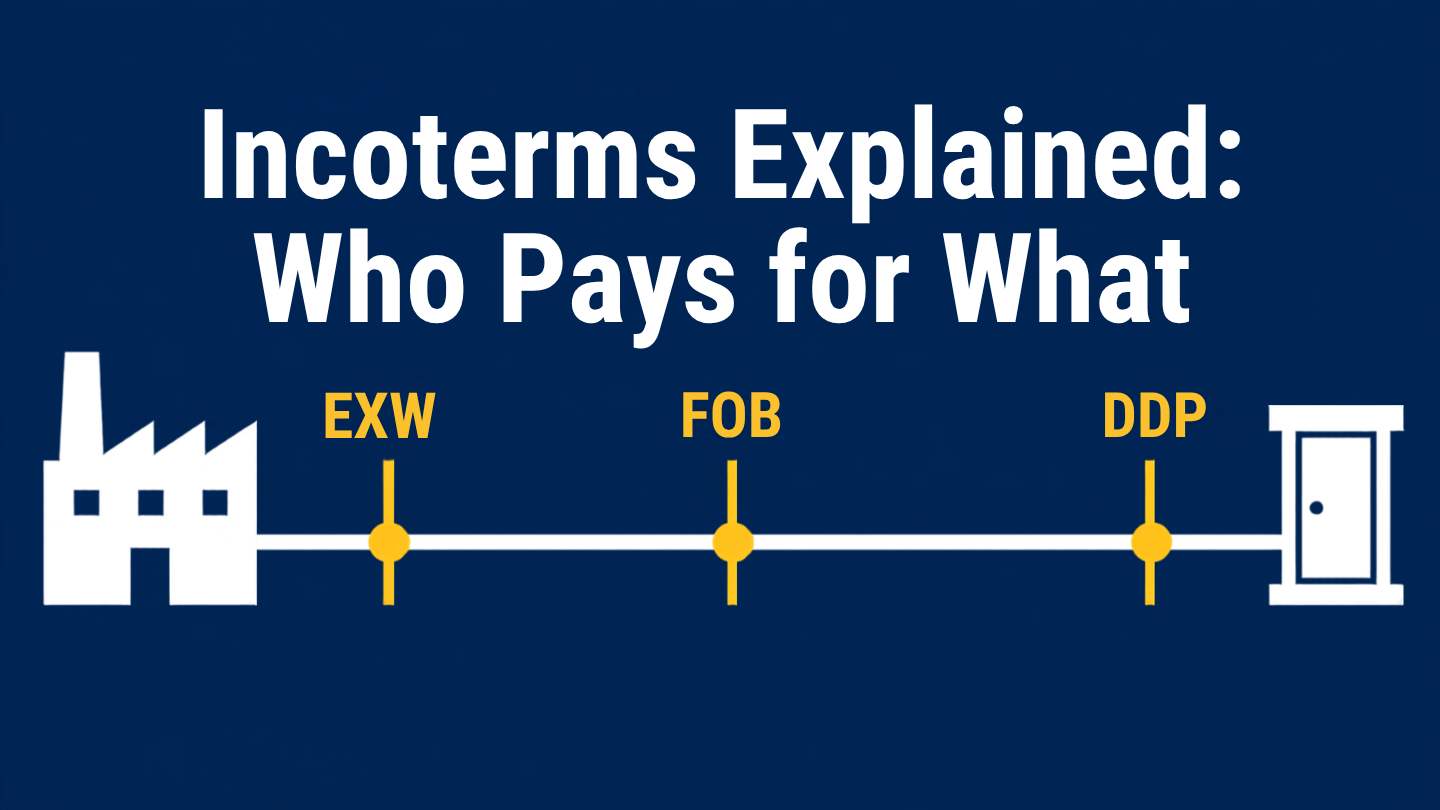
Incoterms explained simply: eleven standard terms decide who pays for freight, insurance, and duty. They also fix the exact point where responsibility for the goods passes from seller to buyer. They don’t set the price. They don’t cover payment terms. They just remove the ambiguity that causes most shipping disputes. One note before we start: there’s no such thing as “Incoterms 2026.” The current edition is still Incoterms 2020.
Last updated: 15 September 2026.
Incoterms Explained: Which Version Applies Right Now?
The International Chamber of Commerce publishes Incoterms. Incoterms 2020 has been in force since 1 January 2020, and it’s still the current edition in 2026. Some websites market “Incoterms 2026” as if a new version exists. It doesn’t. Any contract you sign this year should still reference “Incoterms 2020” explicitly, to avoid confusion. The next genuine revision isn’t expected until around 2030.
What Are the 11 Incoterms Rules?
Seven rules apply to any mode of transport. Four apply specifically to sea and inland waterway shipping.
| Incoterm | What It Means |
|---|---|
| EXW (Ex Works) | Buyer takes on almost everything from the seller’s door onward, including export clearance |
| FCA (Free Carrier) | Seller delivers to a named carrier; buyer handles the main transport |
| CPT (Carriage Paid To) | Seller pays freight to a named destination; risk still transfers earlier, at origin |
| CIP (Carriage and Insurance Paid To) | Same as CPT, plus the seller arranges insurance |
| DAP (Delivered at Place) | Seller delivers to a named destination, ready for unloading; buyer handles import clearance |
| DPU (Delivered at Place Unloaded) | Like DAP, but the seller also unloads the goods at destination |
| DDP (Delivered Duty Paid) | Seller handles everything, including import duty — maximum responsibility for the seller |
| FAS (Free Alongside Ship) | Seller delivers goods alongside the vessel; buyer takes over from there — sea freight only |
| FOB (Free on Board) | Seller’s responsibility ends once the carrier loads the goods onto the vessel — sea freight only |
| CFR (Cost and Freight) | Seller pays freight to the destination port; risk transfers once the carrier loads the goods — sea freight only |
| CIF (Cost, Insurance and Freight) | Same as CFR, plus the seller arranges insurance — sea freight only |
You can find the full legal text for each rule on the ICC’s official Incoterms rules page. The ICC owns and publishes these definitions.
Which Incoterm Should You Actually Use?
It depends on how much control you want, and how much risk you’re willing to take on. FOB remains the most common choice for sea freight from Asia. It gives the buyer control over the main shipping leg. The seller still handles export formalities. DDP looks simpler on paper, since the seller handles everything, including duty. But it also means trusting the seller’s customs figures completely. You get far less visibility into what you’re actually paying. EXW gives you the most control and the most work. FCA is a reasonable middle ground, especially where you want more say over the carrier than FOB typically allows.
Where Does Novex Fit In?
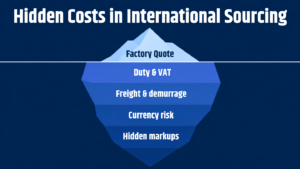
Getting the Incoterm right helps avoid the hidden costs in international sourcing we’ve covered before. Ambiguity here is one of the most common sources of a surprise bill. Incoterms explained clearly, upfront, is a standard part of the commercial terms we lock in early, alongside MOQ and pricing. It all sits under our transparent fee-based model and Supply Focused Methodology.
Frequently Asked Questions
Incoterms explained: what is the current version in 2026?
Incoterms 2020, published by the ICC. No newer edition exists yet. The next revision isn’t expected until around 2030, so any 2026 contract should still cite “Incoterms 2020” explicitly.
What’s the difference between FOB and DDP?
Under FOB, the seller’s responsibility ends once the carrier loads the goods onto the vessel, and the buyer handles the rest. Under DDP, the seller handles everything, including import duty, right up to final delivery.
Which Incoterm gives the buyer the most control?
EXW gives the buyer the most control, since the buyer arranges almost everything from the seller’s door onward. It also means the most work and the most exposure to risk along the way.
Do Incoterms cover payment terms or pricing?
No. Incoterms only define who’s responsible for freight, insurance, and risk at each stage. Payment terms and pricing are separate matters, agreed independently in the commercial contract.
Why do some websites refer to “Incoterms 2026”?
Usually confusion, or an SEO tactic tying content to the current year. No ICC edition by that name exists. The current, correct reference remains Incoterms 2020.
Talk to Us About Getting Your Shipping Terms Right
If you’re unsure which Incoterm actually fits your next order, get in touch. We’ll walk you through what each option means for your specific shipment.