2026 tariffs and supplier strategy are now inseparable questions — you can’t sensibly plan one without the other. The honest answer is less about “switch everything now” and more about knowing exactly where the pressure actually sits. Landed costs are up for the majority of importers, several tariff programmes are stacking on top of each other, and yet the businesses handling this well aren’t the ones panic-switching suppliers — they’re the ones who know which products are actually worth diversifying and which aren’t.
Last updated: 4 August 2026 — this is a living page, refreshed quarterly as tariff rates and rules change.
How Are Current Tariffs Affecting Landed Costs?
Materially, and for most importers. According to the Thomson Reuters Institute, 72% of SMBs now cite cost-related challenges as a top concern in 2026, with 56% specifically reporting increased landed costs and 16% citing direct margin pressure. Several tariff programmes are now stacked on top of each other — temporary Section 122 tariffs, proposed Section 301 actions, ongoing Section 232 tariffs on steel, aluminium, and copper, and new Section 232 duties on semiconductors that took effect in January 2026.
The practical effect is that tariff costs are settling into a grey zone: businesses absorb some of it, pass some of it downstream, and very few are fully insulated either way.
Should You Switch Suppliers Purely for Tariff Reasons?
Not automatically — and this is where a lot of 2026 tariffs and supplier strategy decisions go wrong. Switching makes the most sense at the intersection of two factors: high tariff rate and high volume. A low-volume product carrying a steep tariff often isn’t worth the disruption of requalifying a new supplier; a high-volume product with even a moderate tariff usually is.
It’s also worth being honest about what “diversified” actually means. Two suppliers in two different countries can still both depend on the same small tier-3 component supplier — so if that supplier is acquired or cuts capacity, your diversification evaporates without you ever switching anything. Real diversification means checking further down the chain than most businesses bother to look.
How Do You Protect Quality While Diversifying?
By treating the timeline honestly. Properly qualifying a new supplier — sample development, testing, pilot runs, quality system verification, logistics setup — realistically takes six months to a year, not weeks. Businesses that compress this to beat a tariff deadline are the ones who end up trading a tariff problem for a quality problem, which is almost always the more expensive one to fix.
The more sustainable response is a dual- or triple-sourcing strategy built in advance of the next shock, not in reaction to it: qualified backup suppliers on file, framework agreements in place, and the ability to reallocate volume quickly if a tariff or policy change hits one region hard.
Where Novex Fits In
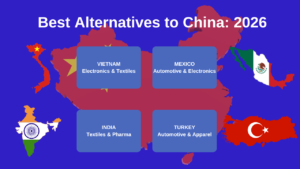
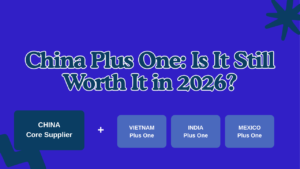
This is exactly what our Supply Focused Methodology is built to de-risk — proper supplier qualification on a realistic timeline, not a rushed one. If you’re weighing up where to diversify, our recent posts on the China Plus One strategy and the best manufacturing alternatives to China cover the regional side of this decision. Whichever direction you go, it’s engaged under the same fee-based model as any other project.
Frequently Asked Questions
How much are 2026 tariffs actually affecting landed costs?
Significantly for most importers — 72% of SMBs cite tariff-related cost challenges in 2026, with 56% reporting higher landed costs specifically. Several tariff programmes are now stacking on top of each other, adding to the complexity.
Should I switch suppliers just because of tariffs?
Only when the product sits at the intersection of a high tariff rate and high volume. For lower-volume products, the disruption of requalifying a supplier often costs more than the tariff itself.
How long does it realistically take to qualify a new supplier?
Six months to a year, when done properly — covering sample development, testing, pilot production, quality system verification, and logistics setup. Compressing this timeline is the most common cause of diversification going wrong.
Does dual sourcing actually protect against tariffs?
Only if it’s genuine diversification all the way down the chain. Two suppliers relying on the same tier-3 component source aren’t really diversified, even if they’re in different countries.
Will this page be updated as tariffs change?
Yes — this is a living page on our site, reviewed and refreshed quarterly as tariff rates, programmes, and rules evolve.
Talk to Us About Your Tariff Exposure
If you’re rethinking your 2026 tariffs and supplier strategy and want help working out which products are actually worth diversifying, get in touch and we’ll help you separate the ones worth acting on from the ones that aren’t.