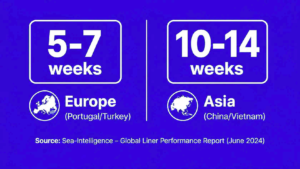
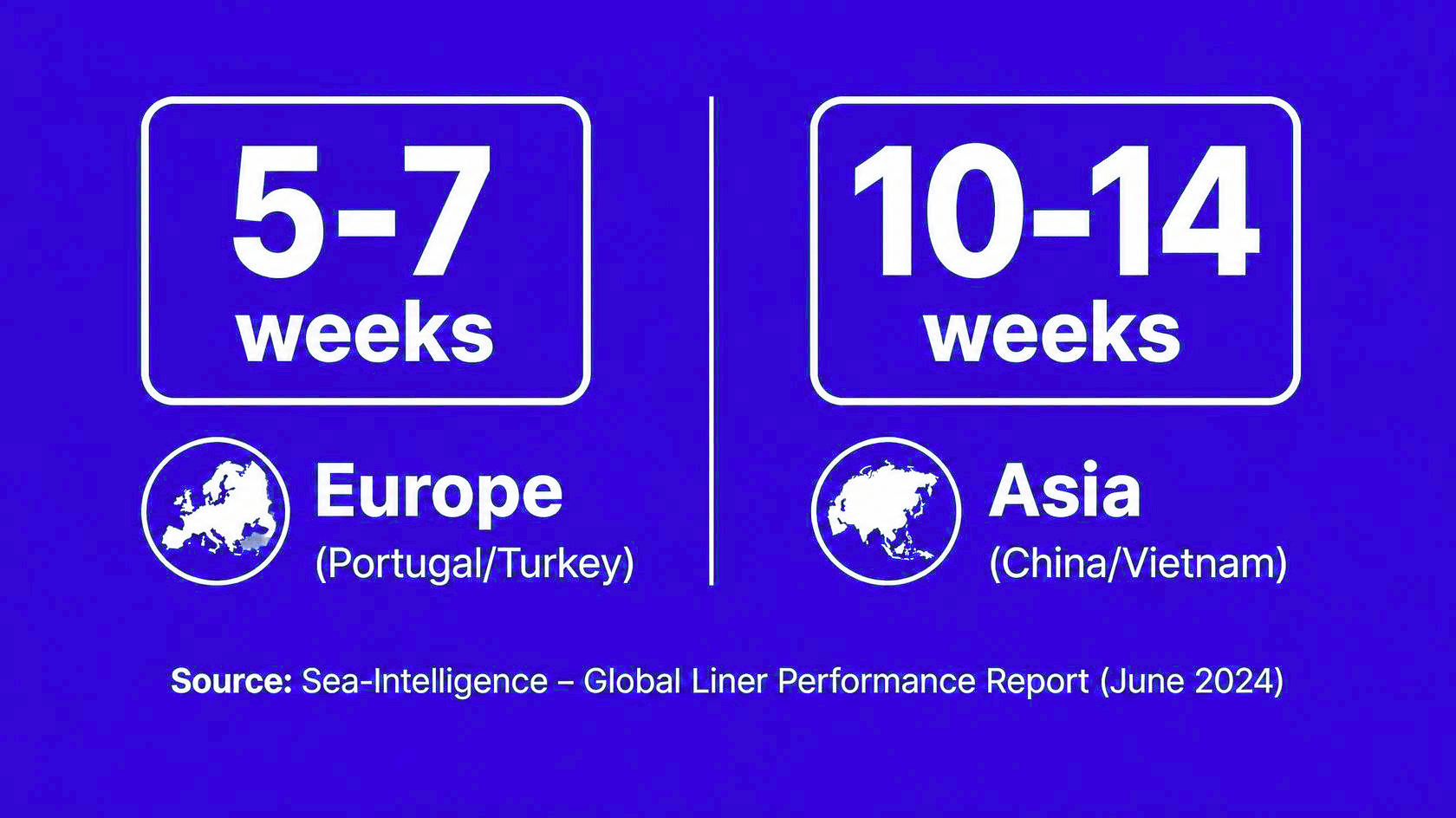
Nearshoring to Europe is gaining ground over Asia sourcing mainly because of speed: European suppliers can typically deliver in 5-7 weeks end-to-end, against 10-14 weeks from China or Vietnam. Add rising carbon costs on long-haul shipping and growing geopolitical caution, and it’s easy to see why 28% of EU companies say they’re now actively planning to nearshore production. Here’s what’s actually driving it, how the lead times stack up, and where Novex fits on the ground.
Last updated: 6 August 2026
What Is Driving the Shift to European Nearshoring?
Three things, mostly at once. First, cost: carbon allowance prices are running €50-€80 per tonne of CO2 in early 2026, and carriers must now surrender allowances covering all emissions on intra-EU voyages and half on international legs connected to the bloc — a large container ship on regular European routes can face $2-4 million a year in carbon costs alone. As the EU’s Carbon Border Adjustment Mechanism expands, goods shipped thousands of kilometres from Asia increasingly carry a real carbon price tag that locally produced goods don’t.
Second, resilience: the war in Ukraine, EU-China tensions, and ongoing sanctions regimes have exposed how fragile long-haul, single-source supply chains really are — a trend nShift’s 2026 delivery trends research describes as targeted nearshoring “in Europe for Europe.” Third, and simplest: speed, which is worth breaking out on its own.
How Does Lead Time Compare to Asia?
Substantially, and consistently across product categories. For a typical apparel programme, end-to-end lead time from PO signing to warehouse arrival runs 5-7 weeks from Portugal and 6-8 weeks from Turkey, against 10-13 weeks from China and 12-14 weeks from Vietnam. Ocean freight alone tells a similar story: Asia-to-destination transit commonly runs 28-42 days, compared with 9-14 days from Portugal or Turkey. For sectors like leather, the gap is even starker — a few days to two weeks from Italian suppliers versus four to eight weeks from India.
That gap compounds. Shorter lead times mean shorter forecast horizons, less inventory sitting in transit, and a much faster ability to react to demand changes — all things that matter more, not less, in a year of tariff volatility.
Where Does Novex Operate in Europe, and Why Does That Matter?
This is where nearshoring to Europe stops being theoretical for us. Novex has active operations in the UK, Italy, and Germany — not a sales office referring work elsewhere, but teams on the ground who can audit a supplier in person, resolve an issue in the local language, and manage a relationship without a 12-hour time difference in the way. Combined with our supplier network across six continents, that means a European nearshoring decision gets the same rigour as any other region, rather than being an afterthought bolted onto an Asia-first process.
Where This Fits in Your Sourcing Strategy
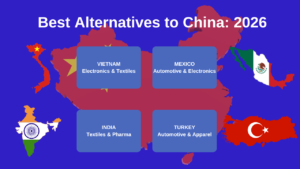
If you’ve followed this series, this is the piece that completes it: we’ve covered the China Plus One strategy, the best manufacturing alternatives to China, and how 2026 tariffs are reshaping supplier strategy. Nearshoring to Europe is often the option that gets skipped in that conversation simply because it’s less familiar than Vietnam or Mexico — but for EU and UK-focused businesses, it’s frequently the strongest option on the table. Our Supply Focused Methodology evaluates it on the same footing as every other region.
Frequently Asked Questions
Why is nearshoring to Europe gaining ground in 2026?
Mainly cost and speed: rising carbon costs on long-haul shipping under the EU’s carbon pricing rules, growing geopolitical caution after recent disruptions, and significantly shorter lead times than Asia.
How much faster is European sourcing than Asia?
Typically 5-9 weeks faster end-to-end, depending on the product. A comparable apparel programme runs 5-7 weeks from Portugal versus 10-13 weeks from China, for example.
Is nearshoring to Europe more expensive than Asia sourcing?
Unit costs are often higher, but total landed cost is increasingly competitive once carbon costs, tariffs, inventory carrying costs, and lead-time risk are factored in rather than comparing unit price alone.
Where does Novex operate in Europe?
We have active operations in the UK, Italy, and Germany, giving us on-the-ground supplier auditing, local-language relationship management, and no significant time zone gap for European clients.
Is nearshoring to Europe only relevant for EU-based businesses?
It’s strongest for businesses selling into the EU or UK, but the resilience and speed benefits are relevant for any business wanting a genuinely diversified, non-Asia-dependent supply base.
Talk to Us About Nearshoring to Europe
If you’re weighing up whether nearshoring to Europe makes sense for your product, get in touch and we’ll walk you through what it would actually look like, supplier by supplier.